
kWh/100 km: understanding your car's consumption
How electric car consumption is measured in kWh/100 km, Wh/mi or mi/kWh, what changes it (speed, cold, heating, short trips) and how to compare it fairly.
On this page
An electric car’s consumption is the energy it uses to cover a distance. It is the number that explains your range, and, once multiplied by the price of electricity, what your driving really costs. It is also a number that moves a lot from one trip to the next, for reasons that are easy to understand.
The units, and how to convert them
- kWh/100 km: kilowatt-hours used per 100 kilometers, the usual unit in Europe. Lower is better.
- Wh/mi: watt-hours per mile. Lower is better.
- mi/kWh or km/kWh: distance covered with one kilowatt-hour. Higher is better.
Method
kWh/100 km = Wh/mi × 0.0621
kWh/100 km = 62.14 ÷ mi/kWh
kWh/100 km = 100 ÷ km/kWh
Example
250 Wh/mi × 0.0621 ≈ 15.5 kWh/100 km, which is also 62.14 ÷ 15.5 ≈ 4.0 mi/kWh.
From the battery or from the wall?
The figure shown by the car is the energy taken from the battery. The energy you pay for is taken from the wall, and it is higher because of charging losses. To compare an electric car’s running cost with a gas car, or two electricity contracts, use the consumption from the wall: the car’s figure divided by your charging efficiency. Our guide to the cost of charging at home shows how to measure it.
What makes consumption change
- Speed. Air resistance grows with the square of speed: going faster costs much more energy per kilometer, and this is the biggest factor on the highway.
- Cold. A cold battery is less efficient, and heating the cabin uses energy that a combustion engine gets for free from its waste heat.
- Short trips. Warming up the cabin and the battery costs the same at the start of every trip; on a short trip, that fixed cost weighs heavily.
- Elevation. Climbing uses energy. Going down gives part of it back through regenerative braking, but never all of it.
- Tires, load, wind and rain. Under-inflated tires, a full car, a roof box, headwind or a wet road all add up.
Regeneration
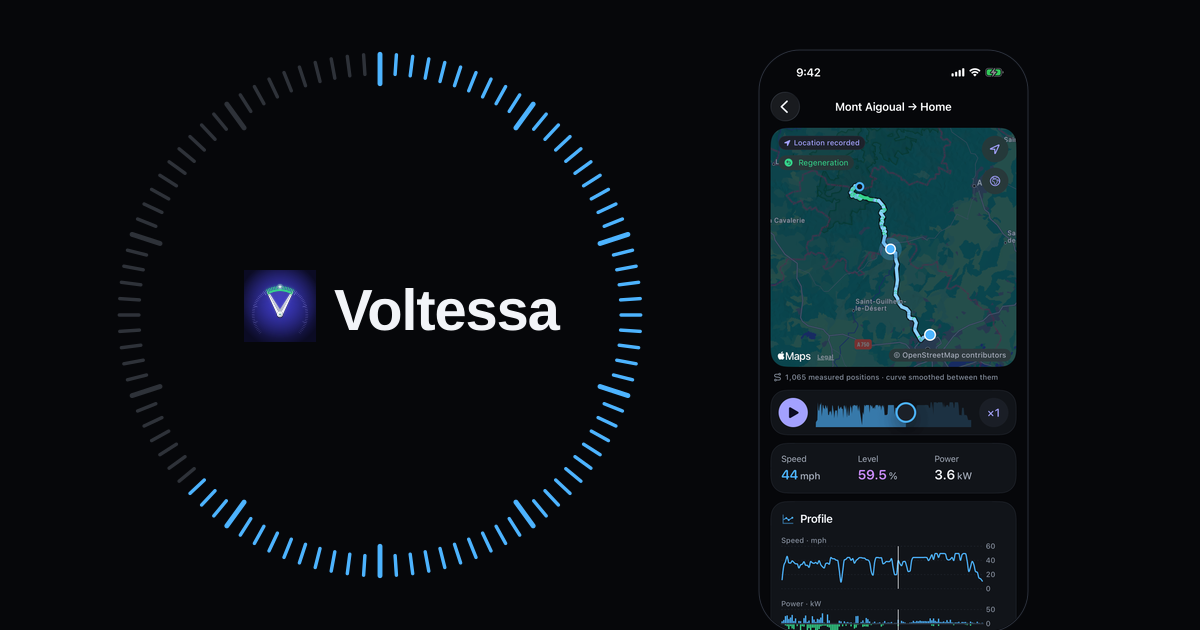
When you lift off or brake, the motor works as a generator and sends energy back to the battery. A trip’s net consumption already includes it: on a mountain road, a high consumption on the way up can be partly balanced on the way down.
Comparing fairly
- Compare the same route in the same season, rather than a winter highway trip with a summer city drive.
- Prefer monthly averages to single trips.
- Count separately what the car uses while parked: features that keep it awake, cabin climate control from the app, or simply standby. This is not driving consumption, but it is part of what you pay; on a Tesla, our guide to battery drain while parked shows how to measure it.
From consumption to cost
Method
Cost per 100 km = consumption from the wall (kWh/100 km) × price (per kWh)
Example
17 kWh/100 km from the wall at 0.20 per kWh: 17 × 0.20 = 3.40 per 100 km.
These values are an example: replace them with your own figures and your own rate.
What Voltessa does
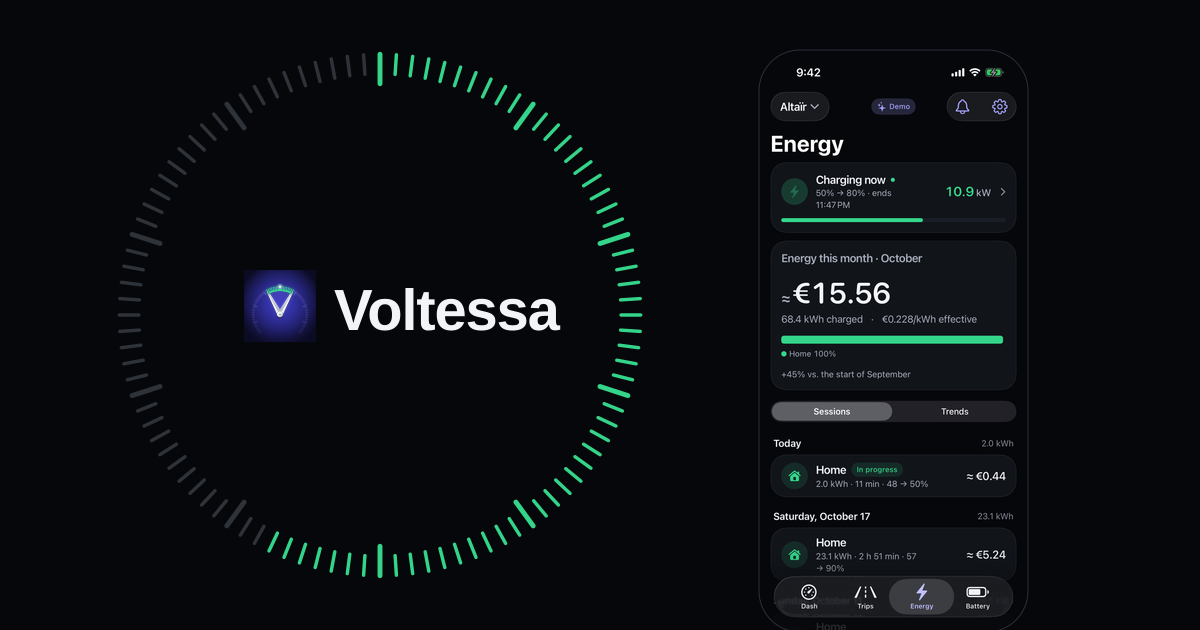
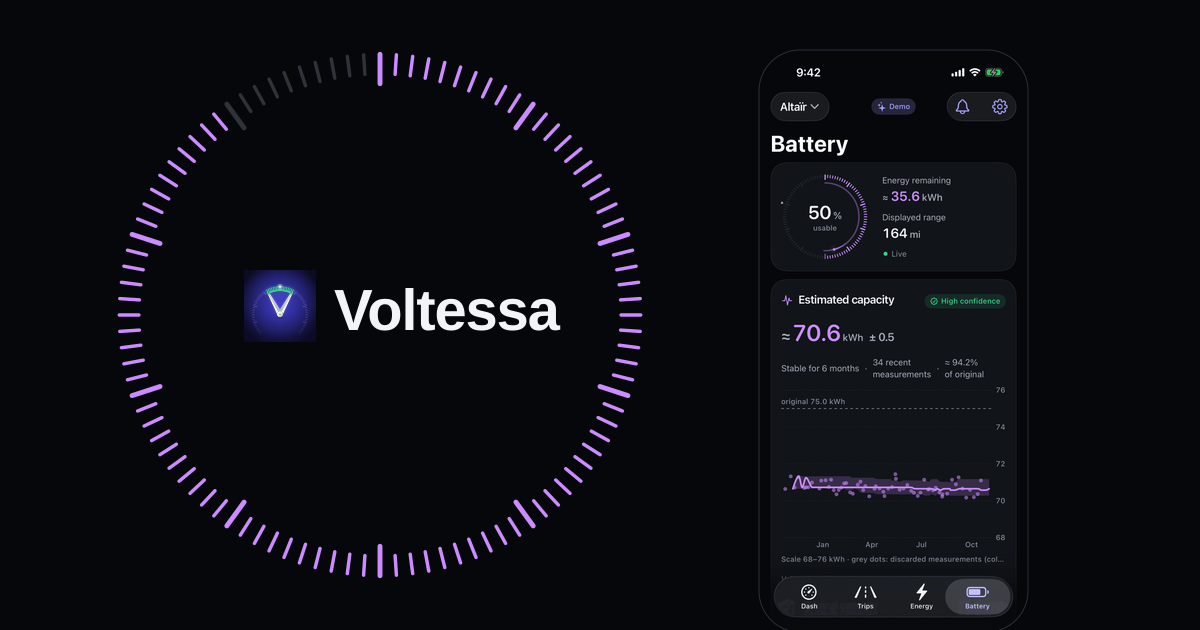
Voltessa records the energy and the efficiency of each trip, with the outside temperature, and builds your monthly efficiency and the energy of the month by source. Trips are drawn on the map and replayed with speed, power and regeneration, so you can see where the energy went.
Voltessa works with Tesla vehicles, on iPhone, iPad, Mac and Apple Watch. To see where your Tesla shows its consumption and what changes it, read our guide to your Tesla’s real-world consumption.
Related articles
Sentry Mode and the energy your Tesla uses while parked
Why a parked Tesla loses charge (phantom drain), what Sentry Mode changes, how to measure the loss on your own car, and the settings that limit it.
Your Tesla's real-world consumption and the Energy app
Where your Tesla shows its consumption in Wh/mi or Wh/km, why the range on screen differs, and what makes it vary: speed, cold, short trips, climate.
Checking your Tesla's battery health
The car's own Battery Health screen and test, a certified report, or your charging data: three ways to check a Tesla battery, normal loss and the warranty.